
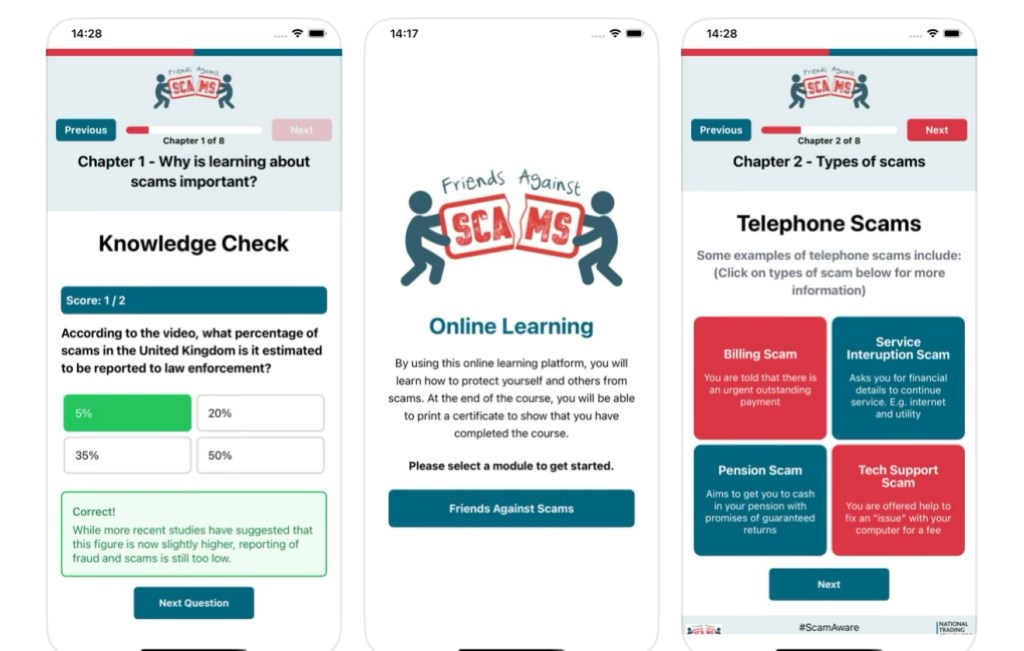
new Friends Against Scams App.
- Trading Standards teams across the UK are warning residents to stay alert following reports of two serious scams currently targeting vulnerable people, particularly as the darker evenings set in.*Community Alarm Payment Scam* : Cold callers are contacting residents claiming to be from community alarm services, saying payments are due to keep the alarm active. They use convincing, coercive language to frighten people into handing over personal or bank details. Once the criminals have this information, they often follow up with a second scam call, pretending to be from the victim’s bank.*NHS Impersonation Scam* : Another scam involves callers pretending to be from NHS or GP practices. They claim to be updating patient records and ask people to click on a link or provide personal details.
- Do you get annoyed when you fill in a form and have to enter your phone number even when you know that the company doesn’t really need it? What are they going to do with it?
Who will they give it to?
Your privacy is valuable – protect your phone number with trueCall38!
The solution: enter phone number 0333 88 88 88 88 (that’s three threes, eight eights) as your phone number, and if, or rather when, they call, those cold call culprits will hear the short but sweet recorded message:- “trueCall38 is handling my calls. I prefer not to be contacted by phone, so please contact me via my email address. Goodbye!”
Genius!
Note: Some online forms are very fussy and won’t accept the full trueCall38 number. If the number is rejected then enter 0333 8888 888 (three threes, seven eights). link - Windows 10 scams
Microsoft ending its support for Windows 10 PCs could expose you to security vulnerabilities and scams. However, even if you extend your licence, this won’t protect you against scams and they are appearing more convincing all the time! link - *Identity theft* is really bad, and the problems it causes can last much longer than you might think.
In this episode of the Which? Money podcast they explain how criminals are finding new ways to steal your identity by using different skills, and how AI (Artificial Intelligence) is making it easier for scammers to get started. They will also tell you what you can do to protect your personal information. Podcast link - Dodgy Amazon Fire Sticks fraudsters scam users. See full list of affected areas, London among them link
Become a Scams Marshall
Become a Friends Against Scams Champion

Newsletter for national Fraud and Scam alerts, sign up here
Authorised Push Payments
As you may be aware, Tower Hamlets has a problem with Fraud and Scam losses, which we regularly report on each month.
The Friends Against Scams Team want to ascertain, whether the remedial methods to deal with this fraud are effective.
I enclose the regulations on reimbursement for Authorised Push Payment (APP) reimbursements and ask you to kindly pass this query for Questionnaire completion on to all you think would be relevant recipients.
If you have supported a victim of APP Fraud and you have any information on your experience with trying to get a reimbursement please kindly fill out our survey.
Please bear in mind that we are collating both successful and unsuccessful cases so any details you have will be useful to us.
The link to the form can be found here: https://forms.office.com/Pages/ResponsePage.aspx?id=RbVh2UwQ0E6Fgh9XDwWVzZPpQITDy_VJsY98__OmaApUQkZZQkdYMDRMOEIxODkzUlJHN0VURkFZTi4u
We would also kindly ask you to share this form with anyone that may be able to provide their insight.
We’re proud to support the Friends Against Scams initiative. Make sure you’re scam aware by completing the training at www.friendsagainstscams.org.uk.
ETA
Since the start of April, EU nationals travelling to the UK need an Electronic Travel Authorisation (ETA) to enter the United Kingdom in addition to an international travel passport.
Scammers are taking advantage of the confusion surrounding the new regulations with a host of websites offering ETA often at a much higher price than the £16 to apply for one through the UK ETA app or the official GOV.UK website.
Don’t get caught the official GOV.UK website is: https://www.gov.uk/guidance/apply-for-an-electronic-travel-authorisation-eta
An ETA is valid for two years for 2 years or until your passport expires, whichever is sooner.
Students Against Scams

Students against Scams has been designed to help students learn how to protect themselves from scams and fraud. Our initial focus is on money mules and helping to ensure that students are not committing this serious crime.
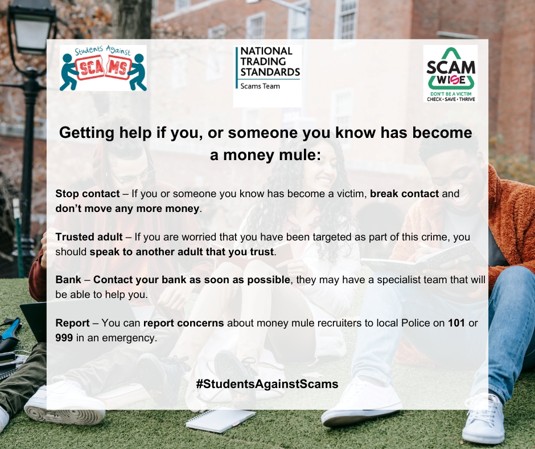
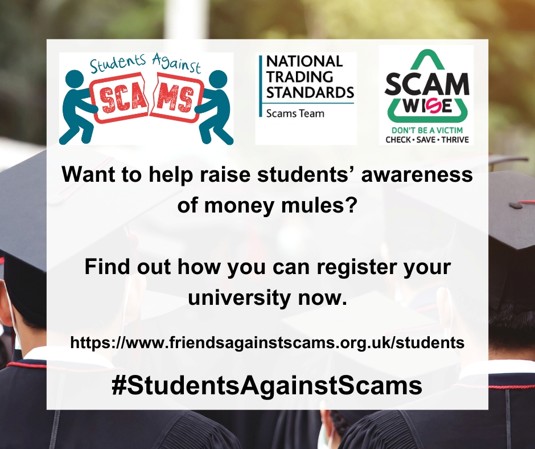
We have developed training and materials for universities to distribute to their students in order to help raise awareness about the dangers of becoming a money mule.
We have recently contacted Universities directly to encourage them to become an SAS University at https://www.friendsagainstscams.org.uk/students.
If you have a university in your local authority area, you may wish to encourage them to become an SAS University or work with them to run training sessions for their students.
You can access the SAS training and resources at https://www.friendsagainstscams.org.uk/students-against-scams-resources or via the Scamchampion area on the Friends Against Scams website.

Doorstep crime
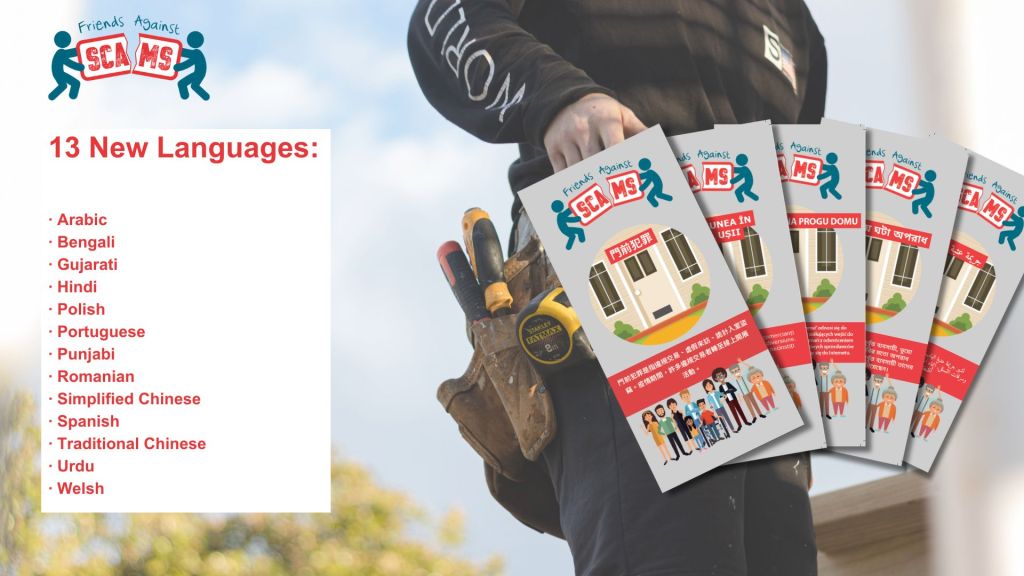
Arabic
Bengali
Gujarati
Hindi
Polish
Portuguese
Punjabi
Romanian
Simplified Chinese
Spanish
Traditional Chinese
Urdu
Welsh
These translations ensure that more residents can access important information about preventing doorstep crime in a language they understand. We believe this initiative will significantly enhance community safety and awareness.
Please find all the different versions of the leaflet available on the Additional Materials section of the Scam Champion area of our website: https://www.friendsagainstscams.org.uk/additional-materials
If you have problems downloading those leaflets please contact us and we can send it to you in the language of your choice.
Criminals take advantage of any situation to try and commit fraud, and the Covid-19 Pandemic and Vaccination rollouts are no exceptions
See a Friends against Scams X feed. | Facebook
Coercive Control watch video
No Blame No Shame
See many helpful resources on the Friends Against Scams website.
- COVID-19 Scams.
- A stranger offering to do shopping for you.
Criminals target elderly and vulnerable people and offer to do shopping on their behalf. However, they’ll simply take the money and never return. Always exercise caution when accepting help from an individual or allowing them access to your home in any capacity.
- A stranger offering to do shopping for you.
- Digital Switchover
- connected to pendant or fall alarm scams. More info
- EU Departure
- Britain’s departure from the EU will provide criminals with an opportunity to target you with fraud and scams. These may include:
- Tricking you into purchasing European Health Insurance Cards from unofficial websites
- Fake HMRC websites urging businesses trading with the EU to register for a “UK trade number”
- Unsolicited calls/emails, using the current news around Brexit, to encourage you to make new investments.
Stay ahead of the criminals by always taking a moment to #Stop and #Challenge any requests for your personal/financial information or money. Remember they’re experts at tricking you into believing they’re from trusted organisations using urgent language and even easily obtainable personal information so ensure you #TakeFiveYou can protect yourself by seeking advice directly from the gov.uk website below and contacting organisations directly using a known email or phone number. If you’re planning on making any investments, check the Financial Conduct Authority’s register for regulated firms, individuals and bodies. Additionally, HMRC will never ask you for your personal or payment information via emails or text messages. #StopChallengeProtecthttps://www.gov.uk/transition https://www.gov.uk/transition
- Britain’s departure from the EU will provide criminals with an opportunity to target you with fraud and scams. These may include:
- Fake lockdown fines
- You receive a fake text message stating that you have been fined for stepping outside during lockdown restrictions. Even though the text claims to be from the government, they are not true. Always take a moment to think before you part with your money or information.
- HMRC, goodwill payment
- You receive a fake text message stating you’ve received a goodwill payment from the HMRC. These messaages are designed to steal your account details. Do not click on the link provided.
- QR code Scams,
- criminals put fake QR codes over genuine ones. More info.
- Selling fake or non-existent products
- Some criminals are trying to sell masks/hand sanitiser or testing kits. Only purchase these from suppliers you trust. And never buy coronavirus prevention pills. These pills do not exist.
- Vaccine Scams
- In the UK, coronavirus vaccines are currently only available via the NHS. You can be contacted by the NHS, your employer or your local pharmacy or GP. If it’s anyone else, it’s a scam.
Vaccinations are free of charge, meaning the NHS will never;- Ask you for your bank account or card detils
- ask you for PINS or passwords
- ask you to provide proof of ID, like passports or utility bills
- ask you to provide personal information, like your mother’s maiden name
- arrive at your home unannounced to administer a vaccine
Reporting - if you receive a suspicious email, forward it on to report@phishing.gov.uk and forward any suspicious texts to 7726. Report any other fraud or cyber crime at www.reportfraud.police.uk or on 0300 123 2040 (or 0300 123 2050 for deaf/heard of hearing)
- In the UK, coronavirus vaccines are currently only available via the NHS. You can be contacted by the NHS, your employer or your local pharmacy or GP. If it’s anyone else, it’s a scam.
- Fraud Prevention
- Do not give any personal information (name, address, bank details, email or phone number) to organisations or people before verifying their credentials.
- Do not let anyone into your home without confirming their identity. Make them wait and call their head office if you need to. Genuine callers will not mind you doing this.
- Be wary of emails or texts that you weren’t expecting. These scam messages can be very hard to spot. They are designed to get you to react without thinking. If you’re not sure, then double check.
 Tower Hamlets Crime Watch
You must be logged in to post a comment.