
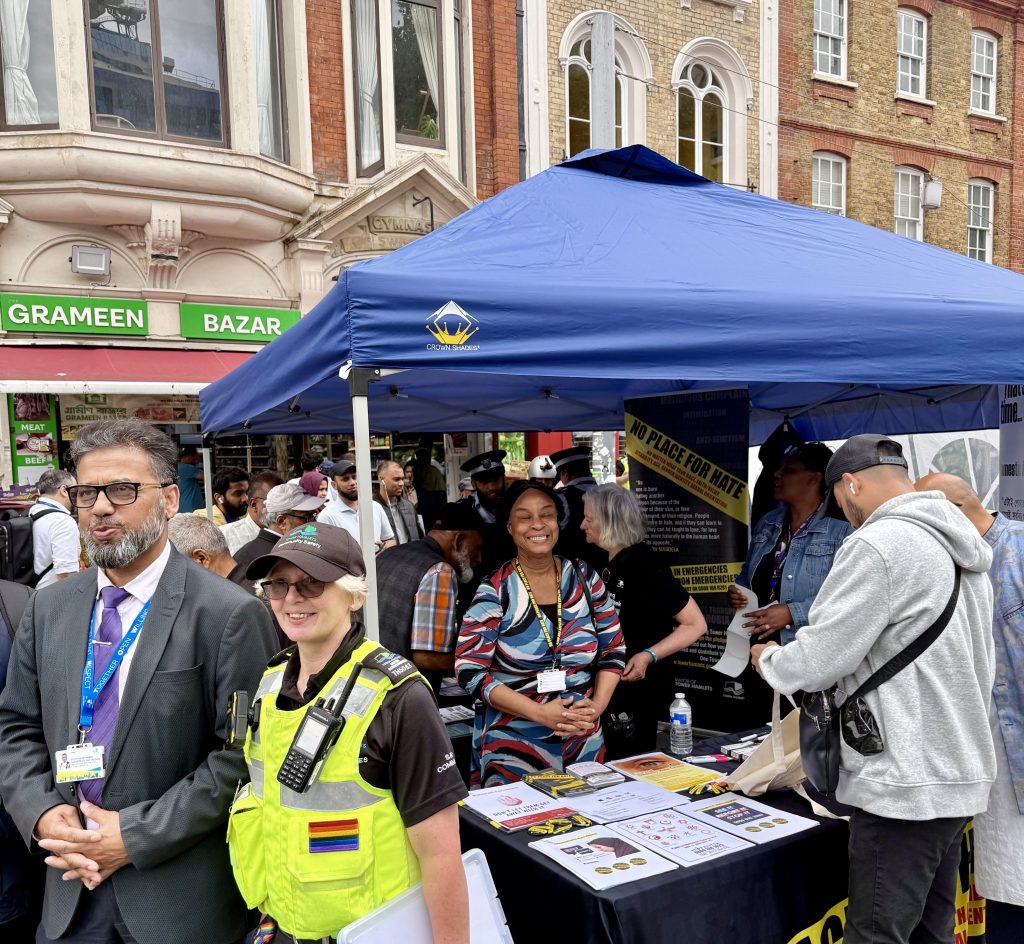
Perpetrators seem to get more brazen, openly up-setting people in any environment and with little care of the consequences.
Click through to our ASB page with government guidelines, local Council information and see below the advice given by the Council’s Safer Neighbourhoods Team.
There is now a new ASB hotline but it’s for Council tenants only. Council tenants can report live incidents by calling 020 7364 2332.
We query whether this ASB hotline for Council tenants only is being served by Council employed THEOs who are funded 100% by tax payers. Yet other social landlords cannot automatically benefit from THEO patrol services equally to council tenants. See footnote *

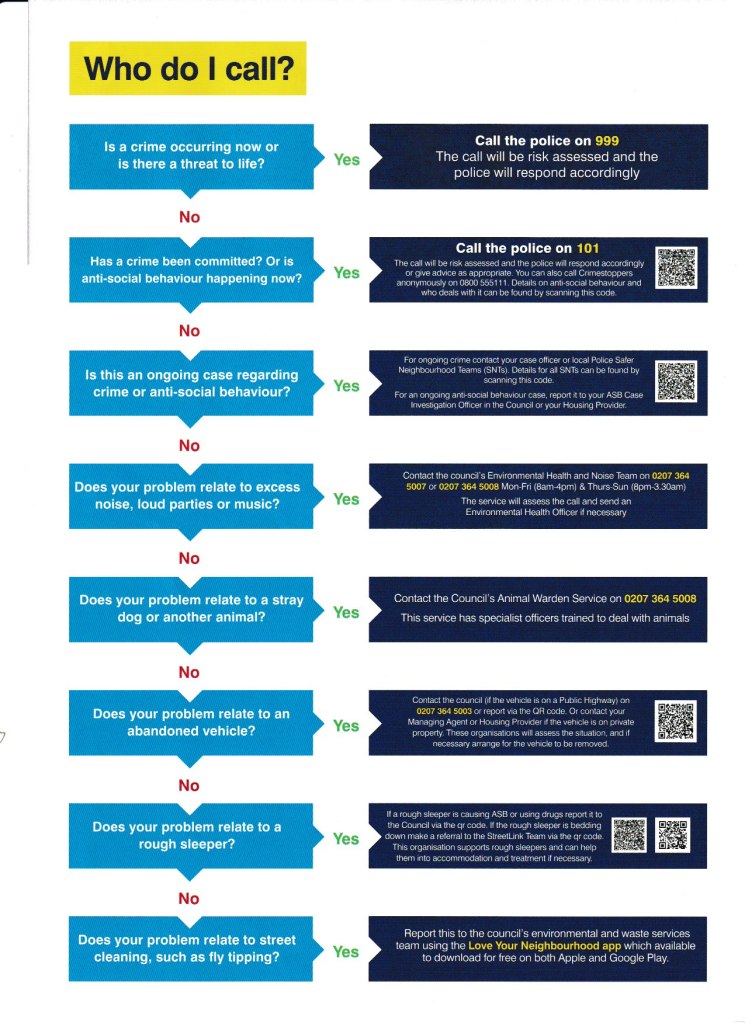
Love your Neighbourhood App, no longer in use. It’s now the Find it Fix it app, details on our Apps page.
See pdf version, easier to read.
Footnote*
What are THEOs?Tower Hamlets Enforcement Officers (THEOs) are a team of non-police enforcement staff employed by the London Borough of Tower Hamlets Council. They handle community safety issues such as issuing fines for anti-social behavior, moving on nuisance vehicles, and supporting vulnerable residents. Introduced as part of the borough’s broader enforcement strategy, THEOs have expanded to include specialized roles in areas like substance misuse.Funding SourcesTHEOs are primarily funded through the Tower Hamlets Council’s annual budget, which draws from local sources (e.g., council tax) and central government grants. The council’s budget-setting process prioritizes community safety, allocating resources based on identified needs like crime reduction and public health. Key details include:
- Core Operational Funding: Integrated into the council’s Medium Term Financial Strategy (MTFS), with a total of £184 million committed to frontline services from 2022–2028. This supports general THEO deployment for enforcement and safety initiatives, including expanded CCTV and street presence.
- Specialized Substance Misuse Funding: Nearly £1 million has been invested in a dedicated THEO team focused on drug-related issues. This forms part of the UK’s Combating Drugs Partnership (CDP), a multi-agency effort involving the council, Metropolitan Police, NHS, and treatment providers. The funding addresses the borough’s high opioid use rates and emerging threats like synthetic opioids (e.g., nitazenes), though critics question its effectiveness compared to rehabilitation services.
Overall, funding decisions are made during annual council meetings, balancing service demands with available resources amid ongoing budget pressures. For the latest budget breakdowns, check the council’s official MTFS documents. Research Grok
Yes, the THEO service is funded through the London Borough of Tower Hamlets Council’s overall budget, which is primarily paid for by all residents via:
- Council Tax – the largest local contribution, collected from every household and business in the borough.
- Business Rates – paid by commercial properties in Tower Hamlets.
- Central Government Grants – including the Revenue Support Grant and other funding streams distributed nationally.
These combined revenues form the council’s general fund, from which THEOs are paid as council employees delivering frontline enforcement and community safety services. While specific initiatives (like the substance misuse THEO team) may receive targeted grants (e.g., from the Home Office via the Combating Drugs Partnership), the core salaries, training, uniforms, and operations of THEOs are covered by the council’s mainstream budget—meaning yes, all Tower Hamlets residents contribute indirectly through council tax. There is no separate THEO-specific charge or levy on residents. Research Grok

 Tower Hamlets Crime Watch
You must be logged in to post a comment.