

Understand your rights ‘Victim’s Code’ see translations 1

Who delivers the victims’ code?
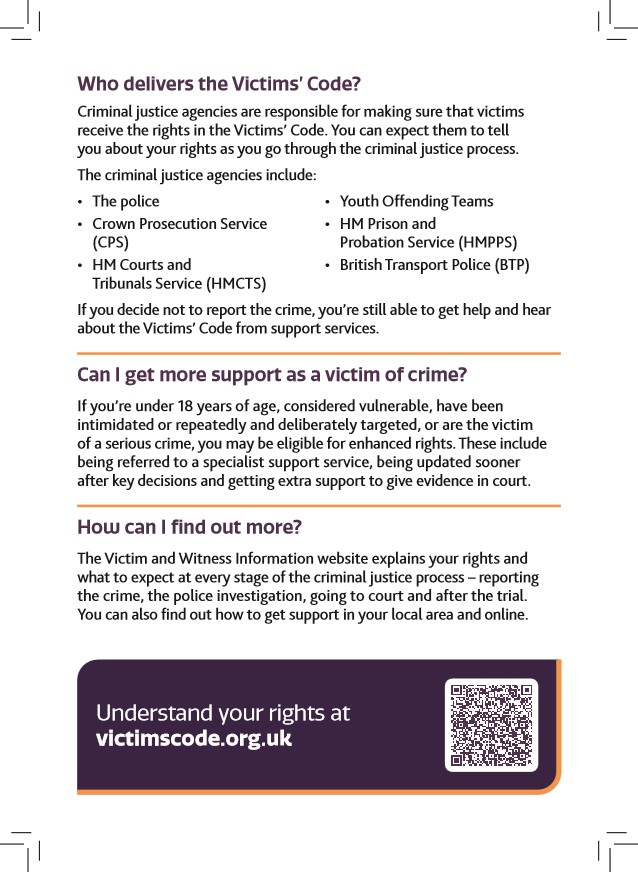
Criminal justice agencies are responsible for making sure that victims receive the rights in the Victims’ Code. You can expect them to tell you about your rights as you go through the criminal justice process.
The criminal justice agencies include:
- The Police
- Crown Prosecution Service (CPS)
- HM Courts and Tribunals Service (HMCTS)
- Youth Offending Teams
- HM Prison and Probation Service (HMPPS)
- British Transport Police (BTP)
If you decide not to report the crime, you’re still able to get help and hear about the Victims’ Code from support services.
Can I get more support as a victim of crime?
If you’re under 18 years of age, considered vulnerable, have been intimidated or repeatedly and deliberately targeted, or are the victim of a serious crime, you may be eligible for enhanced rights. These include being referred to a specialist support service, being updated sooner after key decisions and getting extra support to give evidence in court.
How can I find out more?
The Victim and Witness information website explains your rights and what to expect at every stage of the criminal justice process – reporting the crime, the police investigation, going to court and after the trial.
You can also find out how to get support in your local area and online
What is the Victims’ Code?
The Victims’ Code explains the rights that everyone can expect
to receive as a victim of crime.
Whoever you are and whatever the crime, you have the right to be
informed about the criminal justice process and the support available.
What are my rights under the Victims’ Code?
Right 1: To be able to understand and to be understood
You have the right to understand the information you’re given and
to be understood. This includes access to translation or interpretation
services if needed.
Right 2: To have the details of the crime recorded without
unjustified delay
You have the right to have the crime recorded by the police promptly
and may be able to get extra support from a specialist if you need
help communicating.
Right 3: To be provided with information when reporting the crime
You have the right to receive written confirmation that the crime has
been recorded, get information on the criminal justice process, and be
told about support services.
Right 4: To be referred to services that support victims and have
services and support tailored to your needs
You have the right to be referred to support services or contact them
directly. You should also be told about any extra support at court which
is available to you.
Right 5: To be provided with information about compensation
You have the right to be told about compensation that may be available
for any loss, damage or injury caused by a crime.
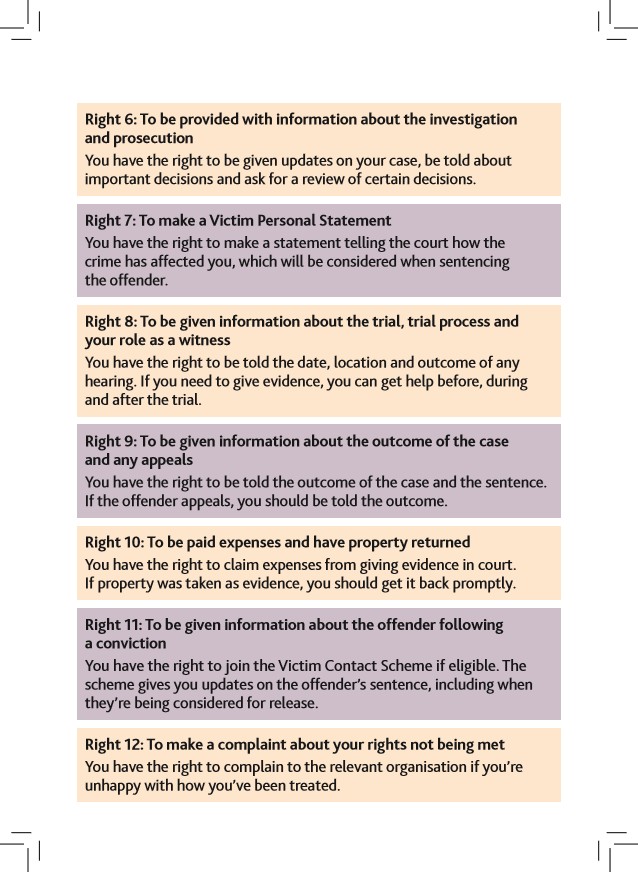
Right 6: To be provided with information about the investigation
and prosecution
You have the right to be given updates on your case, be told about
important decisions and ask for a review of certain decisions.
Right 7: To make a Victim Personal Statement
You have the right to make a statement telling the court how the
crime has affected you, which will be considered when sentencing
the offender.
Right 8: To be given information about the trial, trial process and
your role as a witness
You have the right to be told the date, location and outcome of any
hearing. If you need to give evidence, you can get help before, during
and after the trial.
Right 9: To be given information about the outcome of the case
and any appeals
You have the right to be told the outcome of the case and the sentence.
If the offender appeals, you should be told the outcome.
Right 10: To be paid expenses and have property returned
You have the right to claim expenses from giving evidence in court.
If property was taken as evidence, you should get it back promptly.
Right 11: To be given information about the offender following
a conviction
You have the right to join the Victim Contact Scheme if eligible. The
scheme gives you updates on the offender’s sentence, including when
they’re being considered for release.
Right 12: To make a complaint about your rights not being met
You have the right to complain to the relevant organisation if you’re
unhappy with how you’ve been treated.

 Tower Hamlets Crime Watch
One response to “Victims’ Code”
[…] our page about theft prevention | volunteers | victim support | join us | […]
LikeLiked by 1 person