
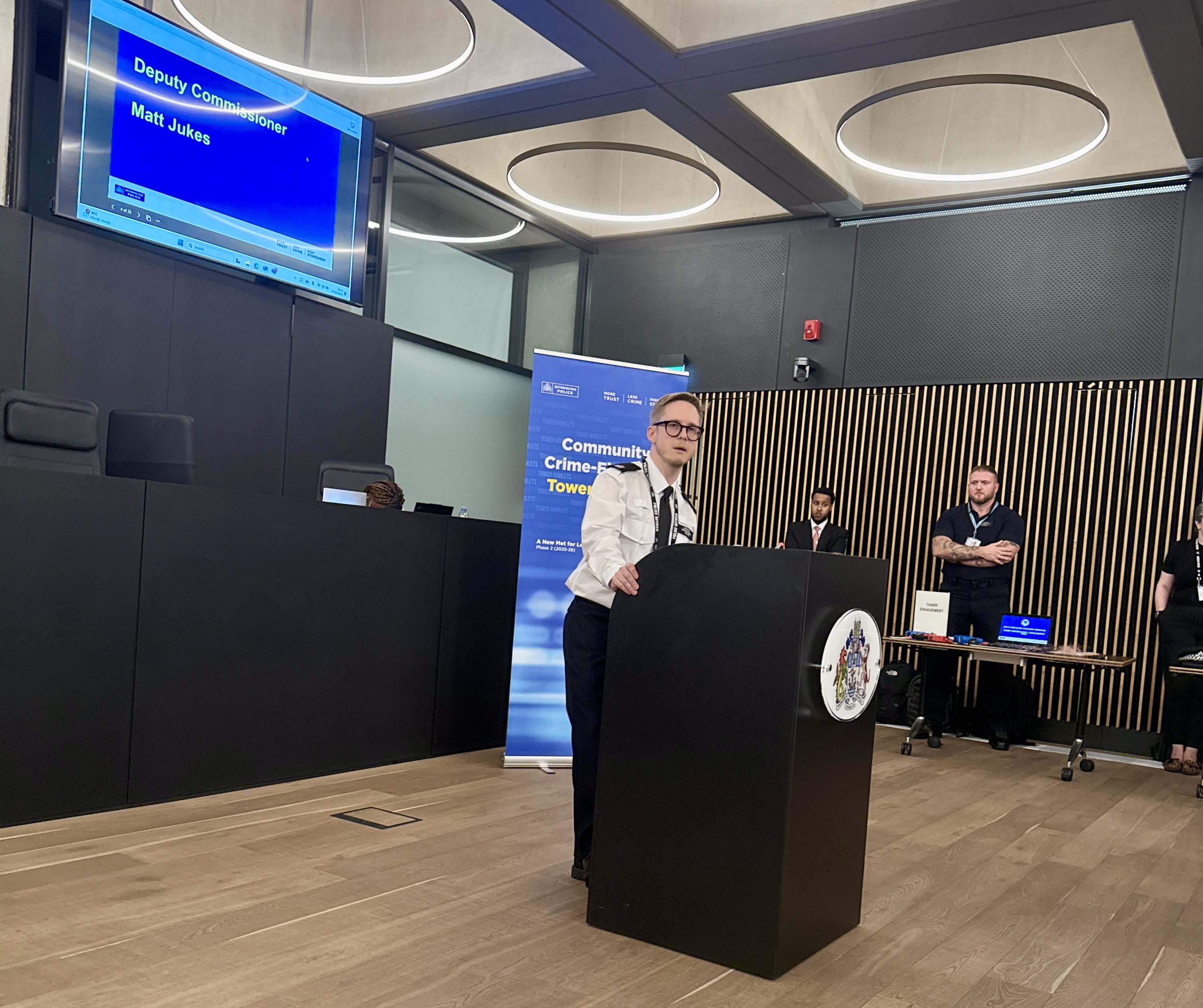
The new model for policing
The Frame Work
The new government white paper entitlted
from local to national
is the guideline for all policing reforms.
Police Reform – Executive Summary
1. Policing needs reform if it is to tackle the crimes that blight local communities and threaten our national security. We will put more officers on the beat in neighbourhood policing and we will strip away the bureaucracy that prevents the police from focusing on the public’s priorities. We will create a more consistent service by holding the police to account for delivering a set of Local Policing Guarantees, backed up by new powers to intervene where forces fall short. We will focus local forces on local crime, while strengthening our ability to tackle serious and organised crime and threats to national security by creating a new national force, the National Police Service. We will save money and strengthen specialist crime fighting capabilities by reducing the number of police forces. We will equip the police for the future with a modern workforce and the best technology to catch criminals. We will reform policing so that local forces protect your community, while national policing protects us all.
2. Police officers and staff work hard every day to keep us safe. However, police performance as measured by detection rates and levels of victim satisfaction has declined and is highly inconsistent across the country. Public confidence in the police fell from 79% in 2015/16 to 67% in 2024/25[footnote 1]. Crime is changing radically: fraud alone now makes up 44% of all crime[footnote 2] and 90% of crime[footnote 3] today has a digital element. Without reform, the gap between the threats we face and the ability of the police to protect the public will grow ever wider.
3. These problems have arisen because:
- Policing has become too distant from local communities, with the percentage of people reporting that they never see the police on foot patrol in their area rising from 25% in 2010/11 to 54% in 2024/25[footnote 4].
- The way we organise policing is based around 43 local police forces and an incoherent mix of national organisations. This has not changed to keep pace with the modern world.
- Between 2010 and 2024 the government stopped setting clear national standards and lost focus on holding the police to account for delivery.
- Policing has fallen behind the criminals, lacking the capabilities to protect our communities from radically changing threats.
4. To address these problems we cannot ‘tinker around the edges’ or implement piecemeal change. This White Paper therefore sets out the most radical programme of police reform in 200 years. It aims to create a police service that is 1) more rooted in local communities and focused on their needs, 2) more coherent in the way it is organised, 3) more consistent in achieving high standards, and 4) more capable in terms of its workforce, technology, use of data and ability to prevent crime. This White Paper commits to the following:
A white paper on the planned reforms was published on the Government website. Titled “from Local to National”, it can be viewed here. (updated version 30. March 26) The changes themselves will be very costly and require considerable policing resources being put into the changing of policing structure.
We have learned on 4. March 2026 that Lord Hogan-Howe will oversea the the Police Force amalgamations.
A new policing bill will become law by 2027 but the new National Police Service (NPS) will not be fully inclusive of Counter Terrorism capability until 2029 or later.
Scotland Yard’s counter-terror chief has revealed they have stopped 19 ‘late-stage’ UK attack plots in the last five years.
Assistant Commissioner Laurence Taylor described the interventions as ‘goal-line saves’ and said 1,000 dangerous extremists are currently being monitored.
Conservative shadow minister Chris Philp has already announced the Conservative Party opposition to the plans of wanting to reduce national police forces from 43 to around 12. He states that 1,318 police officer posts have been lost with an overall reduction of policing employees by 3,000. Gov.uk data. The restructure could be a tactic to reduce police officer numbers overall.
We await Reform UK’s comments. Reform UK are expected to win a considerable number of seats in the next elections nationally.
This could mean, that should Labour no longer be in the majority or lose the next general election that all policing plans will be thrown over again. That will cause considerable instability and inconsistency throughout.
Again, our police service is made the subject of intense political wrangles.

The biggest effect of Labour’s policing reforms will be that Lutfur Rahman, the Mayor of Tower Hamlets who was removed from office in 2015 for electoral fraud, made a political comeback by winning the mayoral election again in May 2022, will be in Charge of policing in Tower Hamlets or whoever wins the Mayoral election in 2026.
See our Tower Hamlets Police page for local details.
Here in Tower Hamlets we have local elections coming up in May and already social media posts are praising the Aspire Council’s record on Community Safety when in fact the Aspire Council proposes to reduce HRA funded police officers from 16 to 10, during the Overview & Scrutiny Committee meeting of 12. January 2026, opposed by Labour Cllr Abdi. See our post for recordings.
Critiques published by The Guardian on 26. January 2026 speaks of powerful voices who criticise the centralising by political powerful figures over policing and national security.
Police and Crime Commissioners will be abolished by 2028 in England and Wales.
The Home Secretary will be able to issue directions to police forces and demand alignment with Home Secretary priorities, which means total political interference on national policing.
Gavin Stephens, chair of the National Police Chief’s Council says that Policing by Consent will no longer be applicable nor will operational independence of police be possible with this change.
Obviously such radical plans are only possible because of Labour’s absolutely majority currently and may not actually continue, depending on outcomes of future elections.
That again, gives heed to our previous concerns that political influence over policing will cause considerable disruption should the intensity of political influence continue to grow. Let’s remember political leaders are not cast in stone and elections can happen in the spur of a moment.
It seems questionable that local Mayors or Council boards should be in charge of local policing when they also rely on elected leaders who can constantly change and have differing priorities. We see the political prejudice in Tower Hamlets Council’s Community Safety Plan denouncing all “right-wing” political influences. Whereby in practise all demonstrations by non left-wing approved people get refused by local police because of severe concerns over community safety. That means, we will no longer have equal rights for all but only for those who shout the loudest and make the biggest threats.
It seems obvious that national central figures might be able to override all local decisions anyhow.
Neighbourhood Policing Performance Framework
The structure of ward based policing, whereby the wards are the same ones as the elected Councillor wars will remain the same. Yet, the forces themselves change. Currently we have BCU forces.

Tower Hamlets is part of the Central East BCU, including Tower Hamlets and Hackney. That might all change in future and we are not even clear whether Metropolitan Police will continue to exist as is now.

In this context we are also concerned how the whole system of Neighbourhood Alert, which is based on Policing forces will change. We recently had Met Engage implemented, relying on the current Met Police area of Greater London. What will happen here? See all current Tower Hamlets ward publications here.

In respect of Met Engage we continue to recommend you just read the messages but do not use it for continued communication with officers as the whole system is about to change. The Met Engage communications you send to police within one area, might be transferred to another in the future. Officers might be deployed elsewhere and your Met Engage communications history will never be part of the Metropolitan Police system but always stay outside of it. The Metropolitan Police, as we know it, may be disbanded, merged, re-arranged, who known.
All we can say, continue reporting crime and ASB to the Police directly, using their website or the @metcc on X for non urgent matters. All communications and reports made directly to police will remain in their system.

