

- Police chiefs, industry executives and transport bosses called to Downing Street to crack down on spiking and protect women and girls
- Spiking is a new criminal offense
- Commitment to halve violence against women and girls is central to the government’s mission to make our streets safe
- Anyone who believes they have been spiked should report it to police as soon as possible.
- If an offence is in progress or has just happened, call 999.
- Reports can also be made via 101 or online.
- The Met has specialist forensic testing capabilities, including equipment to test suspected spiked vapes and identify a broad range of substances that may not be detected by commercial testing kits.


Met warns predatory offenders are increasingly using everyday medicines, prescription drugs and even vapes to spike unsuspecting victims
The warning comes as Met officers prepare for Freshers’ Week operations across London and follows growing evidence that offenders are changing both the substances they use and the environments in which they operate.
While spiking has long been associated with bars and clubs, detectives are also investigating offences linked to house parties, pre-drinks gatherings, student accommodation and other private settings.
In the past year, the Met has secured 131 positive outcomes for spiking-related offences, a 20 per cent increase on the previous reporting period, while specialist investigators have identified an increasingly diverse range of substances being used by offenders.
Whilst offenders continue to use drugs such as cocaine and ketamine, officers are now increasingly encountering cases involving readily available medications, including antihistamines and travel sickness drugs that can cause drowsiness, confusion, memory loss and reduced awareness when administered without a person’s knowledge.

Detectives are also seeing increased reports involving vape spiking, where substances are added to vaping devices or liquids without the user’s knowledge or consent.
The Met has invested in specialist forensic capabilities to meet this evolving threat, including equipment that can rapidly test suspected spiked vapes and identify a wide range of substances that may not be detected by commercially available testing products.
Officers are warning that many over-the-counter medicines and prescription drugs used by offenders will not be identified by self-testing kits marketed online, which is why reporting to police remains critical.
More than half of all reported victims of spiking over the past year were aged between 18 and 35, with Freshers’ Week providing an important opportunity to raise awareness of the changing tactics being used by offenders.
Detective Superintendent Dan Thompson, the Met’s spiking lead, said:
“The nature of spiking is changing. We’re seeing offenders use a wider range of substances than ever before, including everyday medications and substances added to vapes, while increasingly targeting victims in private settings such as homes, parties and student accommodation.
“Our message is simple: if you spike someone, we will do everything in our power to identify you and bring you to justice.
“We’ve secured a record number of charges over the last year, but every report helps us build a better intelligence picture, identify emerging trends and take action against offenders.
“Many of the substances now being used leave a narrow forensic window, which is why reporting as quickly as possible is so important. Reporting within the first 12 hours allow us to secure CCTV, obtain forensic evidence, identify witnesses and make arrests.
“Nobody should hesitate to come forward. Even if some time has passed, we still want to hear from you.”
The dangers posed by offenders operating in private settings were also highlighted in the case of Chao Xu, who targeted women attending gatherings at his flat.
Xu, 33, from Greenwich, was sentenced to life imprisonment after admitting multiple rape, sexual assault and voyeurism offences. Specialist toxicology analysis identified substances including GHB and scopolamine, a travel sickness medication, in drinks offered to victims.
Throughout Freshers’ Week, the Met will carry out targeted operations at universities, student events and night-time economy venues across London, working alongside partners to identify offenders, gather intelligence and prevent harm.
Licensee – Safer Business Alliance


Become a Wave Champion and get free training, posters and stickers. Please click through to this registration form.
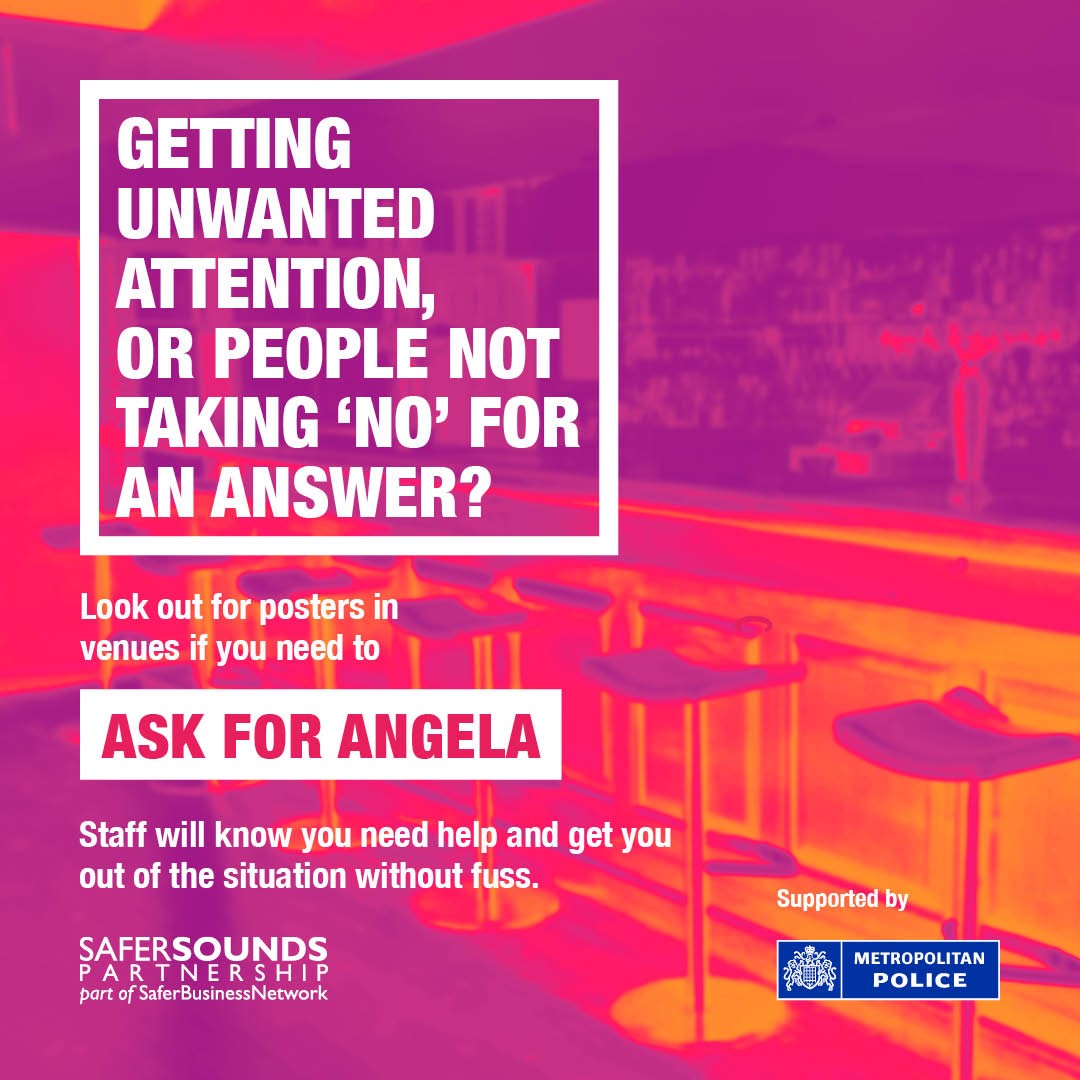
If you own a licensed entertainment venue, pub, restaurant, or bar, please click through to the Ask For Angela scheme. This scheme will also provide you with anti-spiking posters and training.

See a Press release from 24. November 2024.
Prime Minister’s Office, 10 Downing Street, Home Office, The Rt Hon Sir Keir Starmer KCB KC MP and The Rt Hon Yvette Cooper MP
Assistant Chief Constable Samantha Millar, National Police Chiefs’ Council Violence Against Women and Girls Strategic Programme Director, said:
Spiking can have a significant, traumatic impact on victims and feelings of safety in the night-time economy, particularly for women and girls.
Spiking is a complex offence to investigate as drugs can pass through the system quickly and there is often a lack of evidential opportunities, which is why quick reporting and early evidence gathering, including forensic testing, is key.
Police forces across the country have been working proactively to stop spiking from happening in the night-time economy and improve feelings of safety for women and girls. This includes regular, targeted patrols of busy town centres and visiting organisations, such as universities, to raise awareness of the symptoms of spiking.
Forces also work closely with bars, pubs and clubs to tackle spiking, and during the first national spiking police week of action in March, forces collectively visited over 1900 licensed venues to ensure that staff understood how to support victims.
I hope that the policing response to protect women and girls in the night-time economy shows how committed we are to making our streets safer. I would encourage anyone who is a victim of spiking to report it to the police, you will be listened to, and you will be taken seriously.
I would like to add that spiking can take many forms and is not only committed on women and girls. Sexual predictors can target any person they are interested in, this can include men.
Ask for Angela
Please see the dedicated page about the Ask for Angela Help scheme in hospitality venues. VAWG pages. Safer Business also promotes the scheme and training.
